
Music, Light and Scents as Regulators of Internal State
How music, light, scents and silence shape neuro-hormonal state according to Giovanni Ceroni, with practical examples of classical pieces for activation and calm.
Music, scents, light and silence aren't decoration: they're primary biological information the nervous system uses to regulate internal state before consciousness even gets involved.
What Are Music, Light and Scents as State Regulators
Music, light, scents and silence are environmental stimuli that act upstream of thought, shaping the neuro-hormonal setup from which a person perceives, interprets, decides and acts. They don't change identity: they change the physiological ground on which identity gets expressed. That's why the environment is never neutral: it's regulatory. Every human being lives constantly inside an internal state, sustained by a neuro-hormonal balance in constant flux (dopamine, adrenaline, serotonin, oxytocin, cortisol, melatonin) and sensory stimuli don't persuade the mind: they inform the nervous system how to organize its responses.
Why it matters
Understanding this principle matters because it shifts the perspective: whoever consciously chooses music, light and scents is designing the internal state from which they think, feel and decide. Whoever doesn't hands this regulatory function over to the environment and endures it instead of directing it. In coaching, these tools can be used deliberately to help ease someone into the desired state, useful for the work ahead.
How Music, Light and Scents Affect Internal State
Music as a biological stimulus: biologically speaking, music isn't art, it's sound structured over time. The brain responds to elementary patterns (rhythm, intensity, variation, continuity) and every combination makes some internal states more likely than others. Music doesn't create an emotion out of nothing: it makes a state accessible, it prepares it. That's why the same music can be functional in one context and dysfunctional in another: the decisive variable isn't the piece, but the state of the nervous system receiving it.
Some operational examples, drawn from the classical repertoire, illustrate the principle: Beethoven's Symphony No. 5 (1st movement), with its immediate attack and hammering rhythm, promotes determination and a sense of urgency, activating dopamine, adrenaline and noradrenaline. Or Carl Orff's O Fortuna, with its rising intensity, promotes immediate mobilization and power. Holst's Mars, with its relentless rhythm, sustains prolonged vigilance and mental endurance. On the opposite end, the Aria from Bach's Goldberg Variations, with its slow, circular flow, promotes stabilization and emotional integration, activating serotonin and oxytocin and reducing cortisol; Schubert's Ave Maria promotes deep calm and a sense of protection; Debussy's Clair de Lune promotes alert relaxation. For studying and sustained mental focus, pieces with a regular structure and no emotional load, like Bach's Brandenburg Concertos or Philip Glass's minimalist compositions, sustain focused attention and cognitive order. These examples shouldn't be taken as rigid prescriptions, but as functional guidance: the decisive variable always remains the state you want to favor and the nervous system receiving the stimulus.
For sleep, which isn't a sudden shutdown but a physiological transition, functional music needs to be slow, predictable, free of dynamic peaks: it shouldn't evoke, it should let go. For children and pregnant women, particularly sensitive systems, music isn't entertainment but external regulation: the infant neuro-hormonal system is immature and depends on the environment to modulate adrenaline, dopamine, serotonin and oxytocin, with consistent stimuli favoring stability and excessive stimuli producing over-activation.
Scents have direct access to the limbic structures: they don't suggest a state, they evoke it, and can rapidly modulate cortisol, serotonin, dopamine and oxytocin, which is why they should be treated as high-power tools. Light is one of the main synchronizers of the endocrine system, influencing melatonin, cortisol and circadian rhythms: it's not atmosphere, it's biological structure. Silence, finally, isn't a random absence of sound, but a deliberate regulatory choice: at certain moments, no stimulus is more functional than any stimulus.
These mechanisms connect to the balance between two complementary forces in the nervous system: neurotransmission (dopamine for motivation and reward, noradrenaline for focus and reactivity, serotonin for emotional stability), which acts as the accelerator, and neuro-inhibition, driven mainly by GABA, which acts as the brake, reducing mental noise and protecting identity from change perceived as risky. A good coach never forces access to the third, cognitive-identity gate: they prepare it, first opening the instinctive gate and then the emotional one, so that once the person feels acknowledged and safe, neuro-inhibition lowers the defenses.
Common mistakes
A common mistake is treating music, light and scents as simple atmosphere or a matter of personal taste, ignoring their direct impact on the neuro-hormonal system. A second mistake is using a sensory stimulus without considering the person's starting state: the same piece can promote opposite states depending on the context and the nervous system receiving it. A third mistake, especially with children or during pregnancy, is underestimating how sensitive these systems are to environmental stimuli, exposing them to excessive or inconsistent stimulation.
Practical example
A coach who needs to support a client through emotional stabilization work, after a moment of strong activation, might choose to introduce slow, predictable music into the environment, like the Aria from the Goldberg Variations, along with softer lighting, to ease the transition from a state of alertness toward greater calm and integration, before continuing with the specific work planned for the session.
Applications
These tools apply to coaching, easing entry into a specific internal state before a change technique; to preparing for study or performance, choosing music consistent with the goal (activation or sustained focus); to sleep management; to caring for the environment for children and pregnant women; and more generally to the conscious design of the spaces where we live and work.
Frequently asked questions
Why is music considered biological information rather than just aesthetic?
Because the nervous system responds to concrete parameters like intensity, rhythm, continuity and predictability, shaping the neuro-hormonal balance before any conscious aesthetic judgment even kicks in.
Does the same music always produce the same effect on everyone?
No. Music doesn't create an emotion out of nothing, it makes a state more likely: the decisive variable isn't the piece itself, but the state of the nervous system of whoever is listening at that moment.
Why are scents described as “high-power” tools?
Because smell has direct access to the brain's limbic structures and can rapidly modulate hormones like cortisol, serotonin, dopamine and oxytocin, evoking a state instead of just suggesting one.
What are neurotransmission and neuro-inhibition?
Two complementary forces in the nervous system: neurotransmission (dopamine, noradrenaline, serotonin) acts as the accelerator, generating energy and direction; neuro-inhibition, driven by GABA, acts as the brake, protecting identity and generating the blocks tied to the third gate.
Why does more attention to environmental stimuli matter with children and during pregnancy?
Because the infant neuro-hormonal system is immature and depends on the environment to modulate its own hormones, and during pregnancy the maternal neuro-hormonal system is more sensitive and amplified: in both cases, the consistency of the stimulus makes the difference.
Related concepts
What Is an Internal State, The Three Gates of Communication, Emotions in NLP, Physiology and Mood Management.
Go deeper
The regulatory role of music, light and scents, along with the complete table of classical pieces associated with specific states, is presented in the “Emotions” chapter of Volume I of “The Invisible Blade”.
Related articles
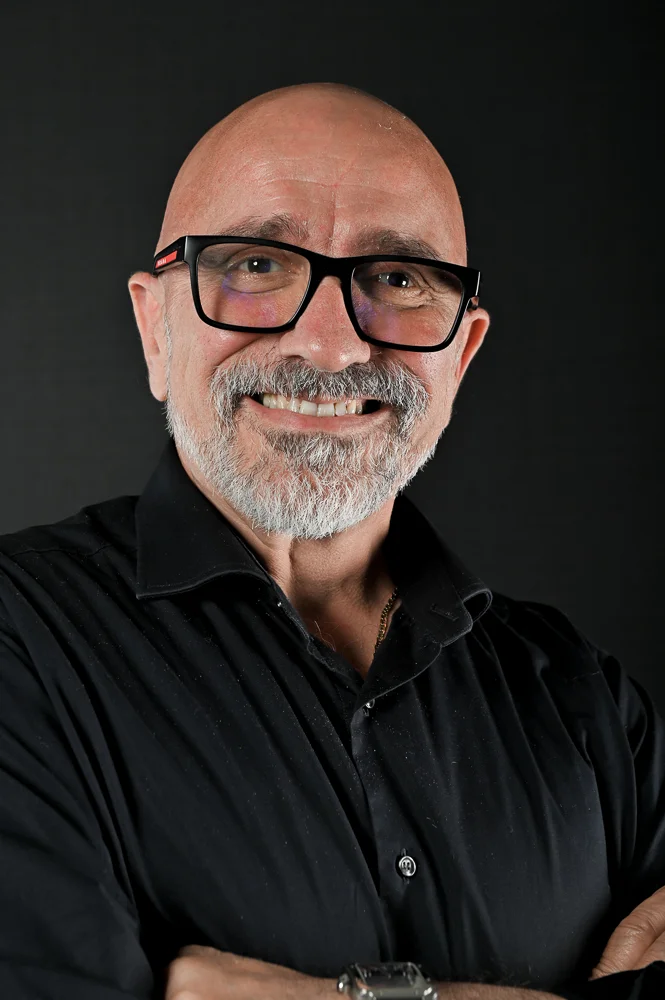
Strategic coach and mental coach. Author of The Invisible Blade – Strategic NLP series and creator of The Invisible Blade Method™.
Further reading to go deeper
If this topic interests you, these readings can help you go beyond the summary offered on this page.
Emotions, internal states and regulation
James A. Russell
Lisa Feldman Barrett
- Barrett, L. F. (2017). How Emotions Are Made: The Secret Life of the Brain. Boston: Houghton Mifflin Harcourt.
- Ekman, P. (2003). Emotions Revealed. New York: Times Books.
- LeDoux, J. (1996). The Emotional Brain. New York: Simon & Schuster.
- Panksepp, J. (1998). Affective Neuroscience: The Foundations of Human and Animal Emotions. New York: Oxford University Press.
- Plutchik, R. (1980). Emotion: A Psychoevolutionary Synthesis. New York: Harper & Row.
- Porges, S. W. (2011). The Polyvagal Theory. New York: W. W. Norton.
- Russell, J. A. (1980). A Circumplex Model of Affect. Journal of Personality and Social Psychology, 39(6), 1161–1178.