
The Four Stages of Learning
Discover the four-stage learning model: unconsciously incompetent, consciously incompetent, consciously competent, unconsciously competent.
Understanding doesn't mean knowing how to do. And that's exactly where the difference between knowing and learning begins. Practice is required, because understanding without application doesn't produce mastery.
What Are the Four Stages of Learning
The four stages of learning is a model describing the path through which a person acquires a new skill, from total unawareness to full automatic mastery. The four stages are:
- Unconsciously Incompetent: you don't know how to do it and you're not even aware you don't know. Example: as a child, you can't drive and don't even know what knowing how to drive means.
- Consciously Incompetent: you're aware you don't know how to do something. Example: as a teenager, you can't drive, but you want to learn.
- Consciously Competent: you're starting to be able to do something and you're aware of it, but you have to actively think through every single step. Example: in your first months of driving, you can do it, but you have to think about everything, braking, shifting, the clutch, signaling.
- Unconsciously Competent: you no longer need to think about it, you're competent through automatic patterns. Applying what you've learned repeatedly creates new mental and behavioral patterns, freeing up space to add new variables and have more strategic choices.
Why it matters
The third stage, consciously competent, is the only one of the four that can't stay that way forever: it's the most tiring and requires the most energy. If you don't apply yourself consistently at this stage, you slide back; if you sustain the effort and the training, you reach the fourth, automatic stage. Knowing this model matters because it normalizes the effort: the hardest, most draining stage of learning isn't a sign that something is wrong; it's simply the required passage toward mastery.
How the Four Stages of Learning Work
The move from one stage to the next isn't instant and doesn't depend only on time spent, but on the quality and repetition of practice. You move from the first to the second stage when awareness of a previously invisible limitation emerges. You move from the second to the third by starting to act, even if it's effortful and deliberate. You move from the third to the fourth only through constant repetition (“practice, practice, practice”) until the action no longer requires conscious attention on every single step.
Common mistakes
A common mistake is getting discouraged right at the third stage, consciously competent, because it demands maximum conscious effort while still being far from the ease of the fourth stage. Many people quit exactly at this point, reading the effort as a sign of personal inadequacy instead of as a normal, transitional phase of the process. A second mistake is expecting to jump directly from the second to the fourth stage, skipping the effort of deliberate, conscious practice: without that step, the automatic pattern never consolidates.
Practical example
A person starting to practice active listening in conversations may initially not notice at all that they're interrupting others (unconsciously incompetent). After getting feedback, they become aware of the habit but keep interrupting anyway (consciously incompetent). As they start applying themselves, they learn to pause before speaking, but have to actively think about it every time, with effort (consciously competent). After weeks of consistent practice, listening without interrupting becomes a natural behavior that no longer requires conscious effort (unconsciously competent).
Applications
This model applies to any learning path: acquiring professional skills, sports training, developing communication and relational abilities, learning a foreign language, and in particular a coach's training, which must pass through all four stages with respect to NLP tools before being able to use them naturally during a session.
Frequently asked questions
What are the four stages of learning?
Unconsciously incompetent, consciously incompetent, consciously competent and unconsciously competent: from complete lack of awareness to the automatic mastery of a skill.
What's the hardest stage of learning?
The consciously competent stage, where you already know how to do something but have to actively think through every step. It's the only one of the four stages that can't stay that way forever: either you slide back, or you move forward toward automaticity.
How do you move from consciously competent to unconsciously competent?
Through constant, intentional repetition, that is, practice applied consistently, until the action no longer requires conscious attention on every detail.
Why is it normal to feel discouraged while learning a new skill?
Because the most tiring stage, consciously competent, is also the one that demands the most conscious energy. Knowing it's a transitional stage, not a sign of incapacity, helps you avoid quitting at exactly the hardest moment.
Does this model only apply to practical skills like driving?
No, it applies to any kind of learning, including relational and communication skills and the coaching and NLP tools described throughout the rest of the series.
Related concepts
The Growth Ladder, Concentration Techniques, The Effective Study Method, What Is an Internal State, Coaching, Atomic Habits: Small Steps, Big Results.
Go deeper
The model of the four stages of learning is presented in Volume I of “The Invisible Blade”, in the chapter dedicated to “Knowing Isn't Enough”, where Giovanni Ceroni introduces it as a premise for any growth path described in the series.
Related articles
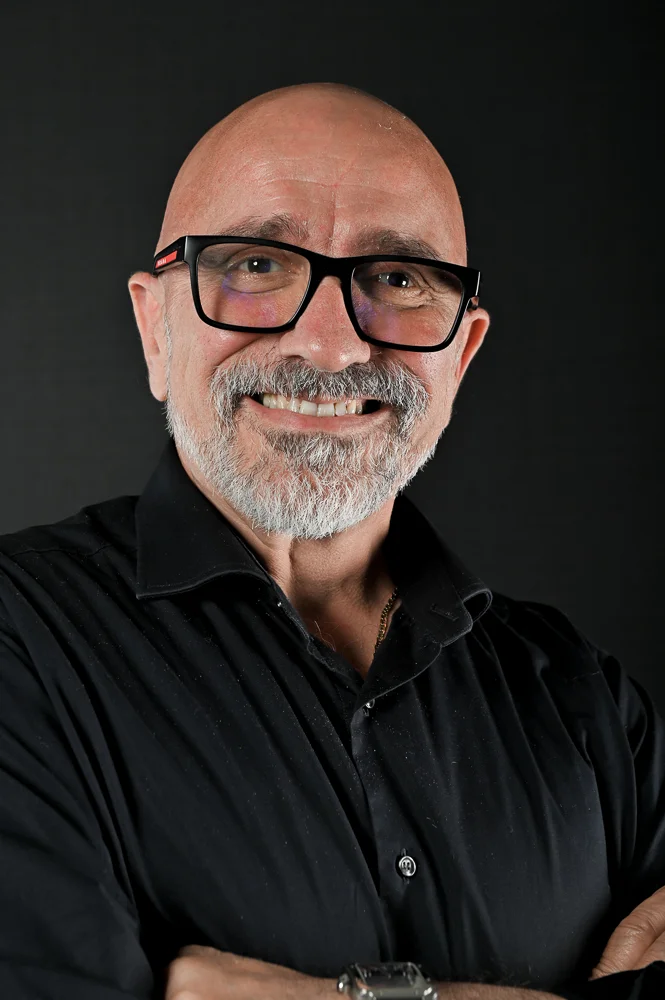
Strategic coach and mental coach. Author of The Invisible Blade – Strategic NLP series and creator of The Invisible Blade Method™.
Further reading to go deeper
If this topic interests you, these readings can help you go beyond the summary offered on this page.
Habits, learning and performance
James Clear
Anders Ericsson, Robert Pool
Hubert Dreyfus, Stuart Dreyfus
- Bloom, B. S. (Ed.). (1956). Taxonomy of Educational Objectives. Handbook I: Cognitive Domain. New York: David McKay.
- Brown, P. C., Roediger III, H. L., & McDaniel, M. A. (2014). Make It Stick: The Science of Successful Learning. Cambridge, MA: Harvard University Press.
- Bjork, R. A., & Bjork, E. L. (2011). Making Things Hard on Yourself, But in a Good Way: Creating Desirable Difficulties to Enhance Learning. In M. A. Gernsbacher, R. W. Pew, L. M. Hough, & J. R. Pomerantz (Eds.), Psychology and the Real World: Essays Illustrating Fundamental Contributions to Society. New York: Worth Publishers.
- Clear, J. (2018). Atomic Habits: An Easy & Proven Way to Build Good Habits & Break Bad Ones. New York: Avery.
- Dreyfus, H. L., & Dreyfus, S. E. (1986). Mind over Machine: The Power of Human Intuition and Expertise in the Era of the Computer. New York: Free Press.
- Ericsson, K. A., Krampe, R. T., & Tesch-Römer, C. (1993). The Role of Deliberate Practice in the Acquisition of Expert Performance. Psychological Review, 100(3), 363–406.
- Tang, Y.-Y., Hölzel, B. K., & Posner, M. I. (2015). The Neuroscience of Mindfulness Meditation. Nature Reviews Neuroscience, 16(4), 213–225.